Higher Level Sales Automation & Marketing Blog
The rules of customer acquisition have changed. Relying on old-school manual outreach and slow response times is a guaranteed way to fund your competitor's bank account.
Led by conversion and automation expert Jesse Privett, this blog is your no-nonsense guide to modern business growth. We break down the exact data-driven strategies, cutting-edge AI marketing workflows, and lightning-fast Speed to Lead automation tools that North East Oklahoma businesses are using to scale their pipelines, dominate the local market, and capture revenue 24/7/365.
Don't let your hard-earned leads go cold. Browse our latest insights below, implement the systems, and start scaling your operations to the next level.
Guerilla Marketing in 2026: How to Get More Clients Without a Big Budget
If you run a small business, you know the feeling. You open your ad platform dashboard, look at the cost per click in your industry, and wonder how you are supposed to compete with companies that have six-figure monthly marketing budgets. The frustration is real, and it pushes many smart business owners to conclude that client acquisition is a rich person's game. It is not. There is a strategic alternative that has been working for over four decades, and in 2026 it is more relevant than ever: guerilla marketing. Coined by Jay Conrad Levinson in his 1984 book, the term describes unconventional, low-cost tactics that rely on creativity and surprise to generate buzz and attract attention. It is not about spending money you do not have. It is about spending time, energy, and imagination in ways that make your ideal clients stop, notice, and remember you. By the end of this article, you will have a replicable framework to plan, execute, and measure a guerilla campaign that actually brings in paying clients, not just likes and shares.
Table of Contents
What Is Guerilla Marketing? (And Why It Works for Client Acquisition)
The Legal and Ethical Guardrails (Avoid the $2 Million Mistake)
What Is Guerilla Marketing? (And Why It Works for Client Acquisition)
Jay Conrad Levinson introduced the concept as a direct response to the advertising industry's obsession with big budgets. His core argument was simple: most small businesses cannot outspend their competitors, but they can outthink them. The military metaphor is instructive. In conventional warfare, large armies face each other with massive resources. In guerilla warfare, small, agile units use surprise, terrain knowledge, and unconventional tactics to defeat a larger force. Apply that to business, and you have a framework for winning attention without winning the budget war.
The psychology behind guerilla marketing explains why it punches above its weight. Humans are wired to notice the unexpected. When something breaks the pattern of daily life, our brains pay attention. Combine that surprise with an emotional connection, and you create a memory that lasts far longer than any banner ad impression. People do not remember your product specs. They remember how you made them feel when they encountered your brand in a place they never expected to see it.

The numbers back this up. Research on guerilla marketing campaigns shows an average ROI of 4.5 to 5 times the initial investment. For a small business owner asking "how do I get more clients for less money," that is the answer in hard data. A $500 stunt that generates $2,500 in new client revenue is not a gimmick. It is a repeatable acquisition channel.
A common misconception is that guerilla marketing only works for consumer brands chasing viral moments. That is wrong. B2B service providers, consultants, agencies, and coaches can adapt these tactics effectively. The key is targeting. A guerilla campaign aimed at fifty decision-makers in your local market can be more profitable than a broad campaign that reaches thousands of unqualified eyes. When you understand this, you stop chasing vanity metrics and start designing stunts that put you in front of the specific people who can hire you.
The 3 Pillars of a High-Impact Guerilla Campaign
Pillar 1: Surprise and Delight (The "Barbie Effect")
In 2023, the Barbie movie did not just run ads. It orchestrated a cultural takeover that felt organic, playful, and everywhere at once. The marketing budget was $150 million, which is not small, but the tactics were guerilla in spirit: unexpected pink installations, partnerships that felt like inside jokes, and a relentless focus on creating moments people wanted to photograph and share. The film grossed over $1.4 billion.
For a small business, the lesson is not the budget. It is the principle of inserting yourself into spaces your ideal client already occupies, but doing it in a way that adds value rather than interrupting. Imagine you run a high-end bookkeeping service for creative agencies. Your ideal clients work from a specific coworking space downtown. Instead of running LinkedIn ads, you could leave branded notebooks at that coworking space with a note inside: "We did the math. You are probably overpaying on taxes by 12 percent. Here is a free checklist to fix that." The surprise is the gift. The delight is the immediate, relevant value. The result is a conversation starter that no cold email could replicate.
Action step: Identify one physical or digital space your ideal client visits daily. Do not invade it with ads. Invade it with value that makes them curious enough to reach out.
Pillar 2: Shareability and Social Proof (The "Duolingo Model")

Duolingo pulled off one of the most efficient guerilla plays in recent Super Bowl history. They bought a five-second ad spot, which cost a fraction of what brands normally pay for Super Bowl airtime. The ad itself was Duolingo's owl mascot delivering a brief, absurd message. But the real genius was the coordinated push notification blast sent to 4 million users within 3.9 seconds of the ad airing. The combination of a cheap broadcast moment and an instant digital follow-up created a multi-channel experience that generated millions of impressions without a blockbuster budget.
The principle here is that your stunt is only the catalyst. The real amplification comes from making it easy and natural for people to share what they experienced. If you design a guerilla activation and nobody pulls out their phone to capture it, you have designed a private moment, not a campaign. The test is simple: ask yourself, "Would someone want to post this on their story?" If the answer is no, redesign until it is yes.
Action step: Build a photo or video moment into the stunt itself. It could be a visually striking setup, an unexpected interaction, or a prop that begs to be photographed. Then make sure your branding and call to action are visible in the frame.
Pillar 3: Zero-Cost Digital Hacks (The "Billie Eilish Method")
In 2024, Billie Eilish executed one of the cleanest digital guerilla tactics in recent memory. She added all 10 million of her Instagram followers to her Close Friends list, a feature normally reserved for small, private circles. The cost was zero dollars. The result was 10 million new followers on the platform, massive engagement, and a wave of press coverage about the clever subversion of an existing tool.
This is the pillar that most small businesses overlook. You do not need a physical installation or a public stunt to run a guerilla campaign. You can subvert the digital platforms you already use in ways that create exclusivity and surprise. For a service business, this could mean creating a private, invite-only LinkedIn newsletter for your top fifty prospects and sending them insights they cannot get anywhere else. The "surprise" is the invitation itself. The perceived value is high because access is limited. The cost is your time and expertise.
Action step: Identify one feature on a platform you already use, LinkedIn, Instagram, or even email, and ask how you could use it in a way the designers never intended, specifically to create an exclusive experience for your best prospects.
5 Proven Guerilla Marketing Tactics to Get Clients in 2026
Tactic 1: The "Ambush" Networking Event
Industry conferences are expensive. A booth can cost thousands, and you are competing with dozens of other vendors for attention. Instead of buying in, host a free, high-value mini-workshop in the hallway, the lobby, or a nearby coffee shop during the conference. Use a simple sign: "Free Strategy Session: Solve [Specific Pain Point] in 15 Minutes." You are not selling from a booth. You are demonstrating expertise in a space where decision-makers are already walking past, bored and looking for something useful to do between sessions. The risk is low. The reward is high-quality leads who self-select by stopping to talk to you.
Tactic 2: The "Contaminated" Value Prop (UNICEF Model)
UNICEF once placed a vending machine in a high-traffic area that dispensed bottles of dirty water. Each bottle was labeled with a disease that contaminated water causes. The machine asked for donations to provide clean water. It was shocking, memorable, and drove action. For a service business, the adaptation is straightforward. A financial advisor could place a "Broken Budget" vending machine in an office building lobby. When someone tries to use it, instead of a snack, they get a card that reads: "Your budget is broken. Let us fix it." followed by a website URL. The unexpected experience creates a story the person will tell colleagues, and the problem you solve is immediately clear.
Tactic 3: The "Close Friends" Client List
Take the Billie Eilish concept and apply it to B2B client acquisition. Create a private, invite-only Slack or Discord channel for your top five to ten prospects. Give them exclusive insights, early access to your thinking, or direct access to you for thirty days. The invitation itself is the guerilla moment. It feels personal, exclusive, and surprising because nobody expects a service provider to offer that level of access before a contract is signed. The cost is your time. The conversion potential is high because you are building a relationship in a space where competitors are still sending cold emails.
Tactic 4: The "Reverse" Billboard
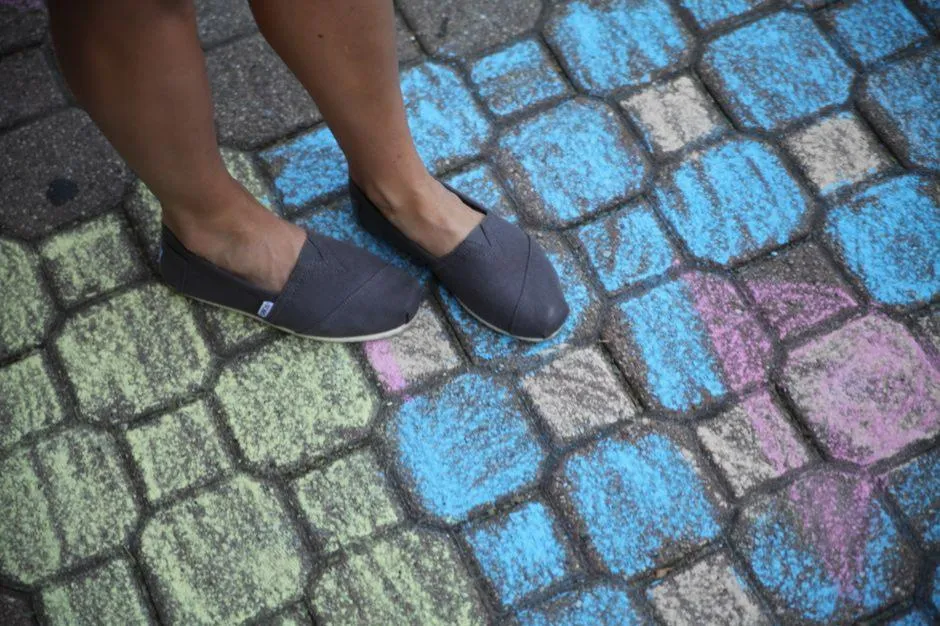
Traditional billboards are expensive and broad. A reverse billboard uses a branded sidewalk chalk stencil, a pressure-washed logo on a dirty sidewalk, or a projection on a building at night. You target a specific street where your ideal clients walk, not a highway where thousands of unqualified drivers pass by. The cost is minimal. The local impact is high. And critically, this approach is legally safer than installing physical objects in public spaces, which brings us to the next section. A B2B consultant could project a simple message on a building near a business district: "Tired of [Industry Problem]? [YourDomain].com" and let curiosity do the work.
Tactic 5: The "Charli XCX" Collaboration Hack
Duolingo did not just sponsor Charli XCX. They created a moment with her that felt organic, weird, and shareable, generating over 20 million impressions. For a small business, the hack is to partner with a micro-influencer or a complementary business for a joint stunt that feels like a surprise, not a promotion. If you are a branding agency, partner with a local coffee shop to create a limited-edition cup sleeve that asks a provocative question about the recipient's brand identity. The coffee shop gets foot traffic. You get a conversation starter in the hands of your ideal client. Neither of you paid for ads. Both of you win.
How to Measure Success (The Missing Piece)
The 3 KPIs That Matter for Client Acquisition
Most guerilla marketing advice stops at the stunt. That is a mistake. If you cannot measure whether your campaign actually brought in clients, you cannot improve or justify repeating it. The first metric is not impressions. It is intent. Track how many people visited a specific landing page or used a unique promo code tied to the stunt. Impressions tell you people saw something. Intent tells you they acted on it.
The second metric is Cost Per Lead. Take the total cost of the stunt, materials plus your time at your hourly rate, and divide it by the number of qualified leads generated. A qualified lead is someone who gave you contact information and expressed interest in your service. If your paid ads produce leads at $50 each and your guerilla campaign produces them at $15 each, you have a clear winner.
The third metric is Share of Voice. Use a free tool like Google Alerts or an affordable one like Brand24 to track how many times your brand name was mentioned online in the forty-eight hours after the stunt. This captures the word-of-mouth amplification that makes guerilla marketing so efficient. If your brand normally gets two mentions a week and suddenly gets fifty, you know the stunt worked as a conversation starter.
The ROI Calculator Framework
The formula is simple: Revenue from new clients attributed to the campaign, divided by total campaign cost, equals ROI. If you spent $500 on a sidewalk projection stunt and landed one client worth $5,000, your ROI is 10x. That is the number that matters. Track it religiously. It is the story you tell yourself to justify the next campaign, and it is the data that turns guerilla marketing from a creative exercise into a legitimate acquisition channel.
The Legal and Ethical Guardrails (Avoid the $2 Million Mistake)
In 2007, Cartoon Network ran a guerilla campaign in Boston that involved placing LED signs depicting a cartoon character around the city. The signs were mistaken for explosive devices. The resulting bomb scare shut down parts of the city, and Turner Broadcasting paid a $2 million fine. The lesson is not that guerilla marketing is dangerous. It is that creating fear or panic, even unintentionally, is a catastrophic failure of judgment. Your stunt should surprise and delight, not alarm.
Permission is not optional. If you are placing anything on private property, a sidewalk, a park, or a storefront, get written permission from the property owner. If you are filming people and using their likeness, get a release form. These steps take time, but they protect you from legal exposure that could wipe out your business.
Ambush marketing at major events requires extra caution. Nike famously wrapped the Centre Pompidou in Paris during the Olympics, an event they did not sponsor. They succeeded because they did not use any official Olympic trademarks or logos. If you are creating a presence near a major conference or event, stay completely clear of their intellectual property. Reference the industry, not the event.
Digital boundaries matter too. Adding strangers to a Close Friends list is clever. Mass-DMing strangers with a sales pitch is spam. The line between guerilla and annoying is thin, and crossing it damages your brand more than any short-term attention is worth.
Common Pitfalls and How to Avoid Them
Pitfall 1: The "One and Done" Mentality. A single stunt is a lottery ticket. A series of three small actions over ninety days is a system. Guerilla marketing works best when your audience encounters you repeatedly in unexpected ways. Plan a cadence, not a one-off.
Pitfall 2: Forgetting the Call to Action. The most common failure mode is a stunt that gets attention but gives the audience nowhere to go. If someone sees your projection, laughs at your vending machine, or reads your sidewalk chalk, and their next thought is "That was cool. Now what?" you have failed. Every guerilla activation must include a clear, simple next step: a URL, a QR code, a phone number, or a physical card they can take.
Pitfall 3: Trying to Go Viral. Viral reach is a vanity metric if the people reached are not potential clients. Focus on being memorable to fifty right people rather than famous to fifty thousand wrong ones. A local accounting firm does not need millions of views. It needs five new business owners in its city to call.
Pitfall 4: Ignoring the Follow-Up. The best stunt in the world is wasted if you do not have a system to capture contact information and follow up within forty-eight hours. The person who engaged with your campaign is warm. Treat them accordingly. Send a personal email. Reference the stunt. Start the conversation.
Conclusion: Your 7-Day Guerilla Launch Plan
Day 1 and 2: Identify the one physical or digital space your ideal client occupies. Be specific. Not "small business owners." Rather, "owners of marketing agencies with five to twenty employees who work from the WeWork on 3rd Street."
Day 3 and 4: Brainstorm a fifteen-minute stunt that delivers value or solves a problem for that specific person. It should be simple enough to execute in a single afternoon and surprising enough to make someone stop and engage.
Day 5: Secure permissions if your stunt is physical. Prepare your tracking link or landing page. Test it. Make sure the call to action is unmistakable.
Day 6: Execute the stunt. Film it. The footage is your content asset for the next phase.
Day 7: Repost the footage on LinkedIn or Instagram, tagging relevant people or businesses. Send a follow-up email to everyone who engaged directly. Reference the moment they experienced and invite them to a conversation.
The businesses that win clients in 2026 will not necessarily be the ones with the biggest budgets. They will be the ones willing to spend imagination instead of money, to surprise instead of interrupt, and to measure what actually matters. If you want to explore how a structured sales and marketing system can complement creative client acquisition, our team at Higher Level Sales helps service businesses build repeatable growth engines. Which tactic will you try first?
Stop Bleeding Leads. Start Booking Appointments on Autopilot.
Every single minute you make an inbound lead wait for a response, your closing rate plummets by double digits. While you are out in the field, running operations, or spending time with your family, your website visitors are moving on to the competitor who answers first.
Don't let slow response times kill your revenue.
At Higher Level Sales, we boost your business's Google Search Engine Optimization (SEO) and deploy elite, custom-built Speed to Lead AI Automation systems that instantly text, qualify, and book your incoming leads into appointments in under 5 seconds—24 hours a day, 7 days a week.
Let's build your growth engine:
👉 Stop guessing and start automating. Claim your competitive advantage before someone else in your niche does.

Testimonials

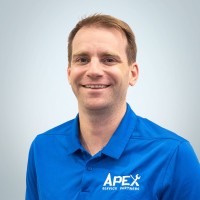
"Our phones are ringing, and bookings are on autopilot."
"Before Higher Level Sales, we were losing half our HVAC leads because we couldn't follow up fast enough during peak season. I was fresh out of guerilla marketing ideas for small business when Jesse built an automated system that captures, quotes, and schedules our jobs instantly. My techs are constantly booked, and no lead slips through the cracks anymore." — Jacob H., Apex Climate Control
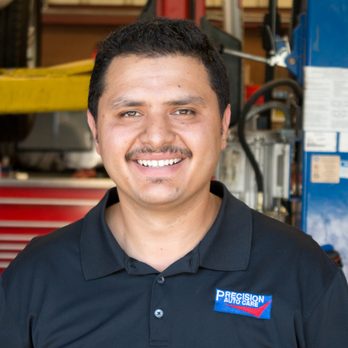
"Turned one-time oil changes into loyal, repeat customers."
"Jesse completely solved my customer retention problem. He set up an automated system that tracks our client's oil change history and texts out personalized maintenance reminders when they are due. Our bay doors are always full, and our local reputation has skyrocketed since I found Higher Level Sales." — Carlos R., Owner, Precision Auto Care
Office:
Chouteau Oklahoma 74337
Call (539) 210-8566
Email: [email protected]
Site: www.higherlevelsales.com