
Higher Level Sales Automation & Marketing Blog
The rules of customer acquisition have changed. Relying on old-school manual outreach and slow response times is a guaranteed way to fund your competitor's bank account.
Led by conversion and automation expert Jesse Privett, this blog is your no-nonsense guide to modern business growth. We break down the exact data-driven strategies, cutting-edge AI marketing workflows, and lightning-fast Speed to Lead automation tools that North East Oklahoma businesses are using to scale their pipelines, dominate the local market, and capture revenue 24/7/365.
Don't let your hard-earned leads go cold. Browse our latest insights below, implement the systems, and start scaling your operations to the next level.
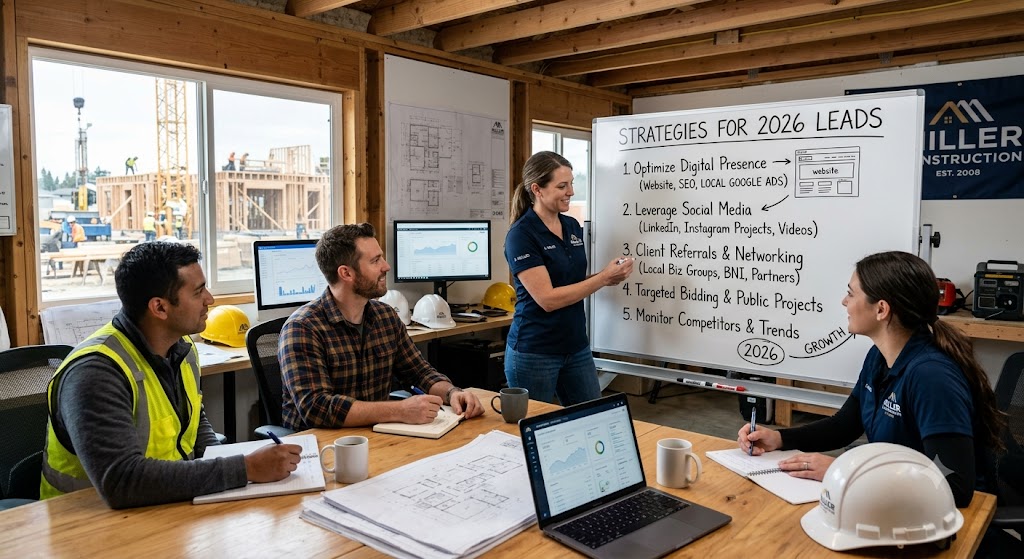
How to Get More Leads for My Construction Company in 2026: A Step-by-Step Guide
If you’ve been searching for how to get more leads for my construction company, you’ve probably seen a lot of generic advice. This guide is different. I’m not going to tell you to “network more” or “just be patient.” I’m going to show you a system that balances free, high-impact tactics with smart paid strategies, all focused on landing jobs that actually make you money. Whether you run a residential remodeling outfit, a commercial electrical firm, or a specialized roofing company, the goal here is quality leads that close, not a flood of tire-kickers who waste your time.
Table of Contents
Why Most Construction Lead Generation Advice Is Failing You
The construction lead generation space has become a noisy mess. On one side, you have Reddit threads and free blog posts telling you to hand out business cards and hope for referrals. On the other, platforms like Houzz Pro and HomeAdvisor promise a steady stream of leads for a monthly fee. Neither extreme tells the full story, and most contractors end up frustrated, bouncing between free tactics that feel slow and paid services that feel like a gamble.
The bigger problem is that almost nobody talks about conversion rates. A lead is not a job. You can get fifty leads in a week and close none of them if those leads are price-shopping or outside your ideal project scope. The real metric is cost-per-closed-job, and most advice ignores it entirely.
Then there’s the one-size-fits-all trap. A home builder in suburban Dallas needs a different approach than a commercial HVAC contractor bidding on municipal projects. Roofing companies face seasonal swings that electrical contractors don’t. If your lead generation strategy doesn’t account for your specific trade and market, you’re leaving money on the table. In 2026, the local search landscape has shifted further: Google now weighs review response speed and profile activity as heavily as keyword relevance, which means the old “set it and forget it” approach to your online presence is dead.
The Free Lead Generation Foundation (No Budget Required)
Optimize Your Google Business Profile (GBP) Like a Pro
Your Google Business Profile is the single most important free tool you have, and most contractors are using about twenty percent of its potential. Start by uploading at least twenty high-quality photos of completed projects. These should be real jobs you’ve done, not stock images of generic construction sites. Potential clients want to see your actual work, your crew, your trucks, and your job site standards.
Posting weekly updates is non-negotiable. Share project milestones, before-and-after shots, seasonal maintenance tips, or special offers. Google’s algorithm in 2026 rewards active profiles with higher placement in the local map pack, and an inactive profile signals that your business might not be operational. Each post is a chance to show up for a new search query.
Respond to every review within twenty-four hours, positive or negative. On positive reviews, thank the client by name and mention the specific project. On negative reviews, stay professional and solution-oriented. Acknowledge the issue, apologize if appropriate, and offer to make it right offline. Prospects read your responses as closely as they read the reviews themselves.
Finally, drill into your profile settings and add every service-specific category that applies. If you’re a roofing contractor, select “Roofing Contractor” as your primary category, not just “Contractor.” Populate the Q&A section with common questions and your own answers. This gives you control over the information prospects see before they ever pick up the phone.
Build a Referral Engine That Runs on Autopilot
Word-of-mouth is the holy grail, but waiting for it to happen organically is a mistake. Formalize your referral program with a tangible incentive. Offer a five-hundred-dollar credit toward future work or a free service add-on for every closed referral. Make the offer specific and memorable, and mention it at project closeout when satisfaction is highest.
Cross-trade partnerships are one of the most underutilized lead sources in construction. Electricians, plumbers, HVAC technicians, and landscapers are in and out of homes and businesses every day, often before you’re even on the radar. Set up a simple monthly check-in call with two or three complementary trades. Agree to refer each other and track the results. A plumber who spots water damage during a repair can send a remodel lead your way before the homeowner starts Googling.
Project delivery itself is a lead generation strategy. A clean job site, clear daily communication, and a thank-you package left on the counter with referral cards turn every client into a salesperson. People remember how you made them feel during a stressful renovation more than they remember the final invoice number. Automate the follow-up with a CRM. Send a satisfaction survey forty-eight hours after completion, then a referral request thirty days later when the glow of the finished project is still fresh.
Local Directory Listings (The Right Way)
Claim and fully optimize your profiles on Yelp, Nextdoor, Angi, and Thumbtack. The critical factor here is NAP consistency: your business name, address, and phone number must be identical across every platform. Even small discrepancies confuse search engines and hurt your local ranking.
Nextdoor is a goldmine for residential contractors and still largely untapped. Join local neighborhood groups and participate genuinely. Offer free, no-obligation estimates when someone asks for recommendations, but don’t spam. A single helpful comment in a thread about home renovations can generate more qualified leads than a month of passive directory presence.
For commercial contractors, prioritize The Blue Book and Building Connected. These platforms are industry-specific and attract general contractors and property managers with real budgets. The leads are project-specific RFPs, not casual consumer inquiries, which means the conversion path is longer but the deal size is significantly higher. Pick three platforms where your target audience actually spends time and go deep on those. Spreading yourself across ten directories with half-filled profiles is worse than dominating three.
Smart Paid Lead Strategies (With ROI Benchmarks)
The HomeAdvisor Zip Code Hack (Unique Tactic)
Most contractors waste money on HomeAdvisor because they accept leads from every zip code in their metro area. Here’s a tactic that changes the math. Call HomeAdvisor customer service directly and request to filter your lead feed to only high-end zip codes. Use Zillow to identify neighborhoods where median home values exceed five hundred thousand dollars. These homeowners are motivated by quality and reliability, not the lowest bid, which means higher close rates and better margins.
Dispute bad leads aggressively and systematically. HomeAdvisor offers credits for leads that don’t answer, fall outside your service area, or are clearly price-shopping with no intent to hire. Most contractors let credits pile up or don’t track them at all. Set a monthly reminder to review every lead, flag the duds, and submit disputes. Track your dispute rate. If it climbs above thirty percent, your filters need tightening.
Start with a three-hundred-dollar monthly cap on one platform. Track cost-per-lead and cost-per-closed-job religiously. If you’re not seeing a three-times return on your spend within sixty days, pause the service and renegotiate your filters or pricing. Paid lead platforms count on contractor inertia. Don’t give it to them.
Google Ads for Contractors (Realistic Budgets)
Google Ads can work for construction companies, but the numbers are higher than most guides admit. A click on “roofing contractor near me” costs between fifteen and thirty-five dollars. For “commercial general contractor,” expect twenty-five to fifty dollars per click. A minimum test budget of one thousand dollars per month is realistic if you want enough data to make decisions.
Negative keywords are your best friend. Add “DIY,” “free estimate,” “handyman,” and “salary” to your negative list immediately. These terms attract people who want to do the work themselves, are price-shopping with no budget, or are looking for jobs, not contractors.
Create separate ad groups for each service line and each geographic area. A roofing ad for Austin should not share a budget with a siding ad for Round Rock. This granularity lets you see exactly which service and location combinations are profitable. Retargeting ads are the secret weapon most contractors ignore. Install a tracking pixel on your website and run display ads to people who visited your gallery or services pages but didn’t call. These prospects already showed interest. A gentle reminder over the next two weeks can recover leads that would otherwise be lost.
Paid Platforms Comparison (Cost vs. Conversion)
Houzz Pro, trusted by over three million contractors and design professionals, is best suited for high-end residential remodels and design-build firms. Expect monthly costs between two hundred and six hundred dollars depending on your market and lead volume. The leads tend to be further along in the decision process, but competition is steep.
The Blue Book, ranging from one hundred fifty to eight hundred dollars per month, remains the standard for commercial subcontractors. The leads are project-specific bid opportunities, not consumer inquiries, which means you’re competing on qualifications and relationship, not just price.
Salesgenie is a data-driven option for cold outreach. It’s not for everyone, but commercial contractors targeting specific property owners or facility managers can build targeted lists and run direct mail or email campaigns. The key is treating it as a prospecting tool, not a lead source.
No platform guarantees a conversion rate. If a service sends you ten leads and you close one, your cost-per-closed-job is the monthly fee divided by one. If that number is higher than your profit margin on the job, the platform is a loss leader no matter how many leads it delivers. Track your own data and make decisions based on your numbers, not the platform’s marketing claims.
Content Marketing That Actually Generates Calls
The “They Ask, You Answer” Method for Contractors
Marcus Sheridan’s “They Ask, You Answer” framework is the most practical content strategy for construction companies, and it starts with a move most contractors resist: publishing a pricing guide on your website. You don’t need to list exact prices for every scenario, but a page titled “What Does a Kitchen Remodel Cost in [Your City]?” with real ranges and the factors that influence price builds immediate trust. It also filters out prospects whose budgets don’t align with your work, saving you hours of wasted estimates.
Identify the top ten questions every prospect asks during your initial consultation. How long will this take? What permits do I need? Will you handle the subcontractors or do I need to find them? Turn each answer into a blog post or a short video. These pieces of content work for you twenty-four hours a day, pre-educating leads before they ever call.
Case studies with real numbers outperform generic testimonials by a wide margin. A page that says “We replaced two thousand square feet of roofing in Austin for eighteen thousand five hundred dollars, completed in three days” gives a prospect something concrete to compare against. It shows you track your results and stand behind them.
Video Content for Local SEO
Google’s local algorithm in 2026 gives significant weight to video content. Film sixty-second project walkthroughs on your phone, no professional crew required. Walk through a completed kitchen, point out a detail you’re proud of, and upload the video to YouTube and your Google Business Profile. These videos signal activity and relevance to Google while giving prospects a real look at your work.
TikTok and Instagram Reels are not just for consumer brands. Commercial contractors can post “behind the build” content showing project complexity, safety protocols, and team coordination. Facility managers and property owners scroll these platforms too, and a well-executed commercial project video can spark a conversation that leads to an RFP.
Your “About Us” page should feature a two-minute video of you, the owner, explaining your process and what you value. A face and a voice build trust faster than any paragraph of text. Prospects want to know who will show up at their door, and a video answers that question before they ask it.
Website Optimization for Lead Capture
Your website must load in under two and a half seconds. Use Google PageSpeed Insights to check your current performance. Slow load times kill leads, especially on mobile, where most local searches happen. Compress your images, eliminate unnecessary plugins, and consider a lightweight theme if your current site drags.
Place a single, clear call-to-action above the fold on every page. “Get a Free Estimate” or “Call Now for a Quote” should be the first thing a visitor sees. Remove competing CTAs, pop-ups, and clutter. A confused visitor doesn’t call. They leave.
Create separate landing pages for each service and each location you serve. A page titled “Roofing Contractor in Austin, TX” with local project photos, a map embed, and location-specific content will outrank a generic “Services” page every time. This is the foundation of local SEO, and it compounds over time as each page builds authority.
Niche-Specific Strategies (Residential vs. Commercial)
Residential Contractors (Roofing, HVAC, Remodeling)
Seasonal planning separates thriving residential contractors from those who struggle through winter. Use the slow months for content creation, CRM cleanup, referral program setup, and team training. When spring demand spikes, your Google Ads and GBP are already optimized, and your referral engine is primed. You’re capturing demand instead of scrambling to generate it.
Door hangers in neighborhoods where you’ve just completed a job are old-school but effective when done right. Include a photo of the finished project on the hanger and a “neighbor discount” offer. The visual proof of your work, combined with a time-limited incentive, creates urgency and trust simultaneously.
Real estate agent partnerships are a lead source hiding in plain sight. Agents need inspectors, and inspectors find issues that need contractors. Offer a referral fee for every closed lead an agent sends your way. A single agent with a steady stream of homebuyers can become a reliable monthly lead source.
Commercial Contractors (General, Electrical, Plumbing)
Commercial leads involve longer sales cycles, typically thirty to ninety days from first contact to signed contract. Build a nurture email sequence for prospects who request information but aren’t ready to bid immediately. A monthly email with a recent project update, a helpful article, or a permit deadline reminder keeps you top-of-mind without being pushy.
Industry trade shows like World of Concrete and the International Builders’ Show are worth the investment if you attend with a specific lead capture system. QR codes on your booth materials, a business card raffle for a meaningful prize, and a follow-up sequence sent within forty-eight hours of the event turn handshakes into pipeline.
PlanHub and Building Connected are the go-to platforms for bidding on public and private commercial projects. Focus your efforts on projects within a fifty-mile radius. Travel costs erode margins faster than any other variable, and a local project you can service efficiently is worth more than a larger project two states away.
Tracking Your Lead Generation ROI (The Missing Metric)
Most contractors cannot tell you what a lead costs them or what a closed job costs by channel. Set up a simple spreadsheet today. For each lead source, whether it’s your Google Business Profile, HomeAdvisor, a referral, or a paid ad, log the number of leads received, calls answered, estimates given, jobs closed, and total revenue generated. This data is the only way to know if your efforts are working or if you’re funding a platform’s shareholder dividends with no return.
Speed to lead is the single biggest competitive advantage in construction sales. Answer incoming calls within five minutes or use a call routing service to forward inquiries directly to your cell. A five-minute response delay can reduce your conversion rate by as much as eighty percent. The first contractor to answer the phone wins the job more often than the cheapest bid.
Use a CRM to automate follow-up. Send a text message within sixty seconds of a missed call. “Hi, this is Mike with [Company Name]. Sorry I missed you. I’ll call back in five minutes, or you can reply here with a good time to talk.” This simple step recovers leads that would otherwise call the next contractor on the list.
Review your data monthly. If a channel costs five hundred dollars and generates five thousand dollars in closed revenue, double down. If it costs five hundred and generates two hundred, cut it without hesitation. Sentiment and gut feel have no place in lead generation decisions. The numbers tell the truth.
Final Checklist for 2026 Lead Generation Success
Optimize your Google Business Profile with twenty or more project photos and commit to weekly posts. Set up a formal referral program with clear incentives and at least two cross-trade partnerships. Test one paid platform, either HomeAdvisor with the zip code filter or Google Ads with tight negative keywords, at a five-hundred-dollar monthly budget for sixty days. Create five pieces of “They Ask, You Answer” content, whether blog posts or short videos, that answer your most common prospect questions. Track every lead source in a spreadsheet and review the numbers monthly. The contractors who win in 2026 are not the ones with the biggest ad budgets. They’re the ones who build a system, measure everything, and adjust faster than their competition.

Stop Bleeding Leads. Start Booking Appointments on Autopilot.
Every single minute you make an inbound lead wait for a response, your closing rate plummets by double digits. While you are out in the field, running operations, or spending time with your family, your website visitors are moving on to the competitor who answers first.
Don't let slow response times kill your revenue.
At Higher Level Sales, we boost your business's Google Search Engine Optimization (SEO) and deploy elite, custom-built Speed to Lead AI Automation systems that instantly text, qualify, and book your incoming leads into appointments in under 5 seconds—24 hours a day, 7 days a week.
Let's build your growth engine:
👉 Stop guessing and start automating. Claim your competitive advantage before someone else in your niche does.

Testimonials


"Our phones are ringing, and bookings are on autopilot."
"Before Higher Level Sales, we were losing half our HVAC leads because we couldn't follow up fast enough during peak season. I was fresh out of guerilla marketing ideas for small business when Jesse built an automated system that captures, quotes, and schedules our jobs instantly. My techs are constantly booked, and no lead slips through the cracks anymore." — Jacob H., Apex Climate Control

"Turned one-time oil changes into loyal, repeat customers."
"Jesse completely solved my customer retention problem. He set up an automated system that tracks our client's oil change history and texts out personalized maintenance reminders when they are due. Our bay doors are always full, and our local reputation has skyrocketed since I found Higher Level Sales." — Carlos R., Owner, Precision Auto Care
Office:
Chouteau Oklahoma 74337
Call (539) 210-8566
Email: [email protected]
Site: www.higherlevelsales.com